
Table of Contents
ToggleTaking good care of yourself after an abortion matters a lot because it helps your body recover faster, lower risks of getting infections and also supports your physical and emotional well being.
If you are in South Africa, you have the right to safe, legal abortion services in 2026 and following recommended post-abortion care instructions provided by your healthcare provider is very important.
What Is Post-Abortion Care
Post-abortion care refers to the medical care, advice, and support a person gets after an abortion to recover safely and stay healthy.
It involves managing normal physical symptoms with rest, heat, and pain relief while avoiding vaginal insertion for a week or until bleeding slows
What Happens Physically Right After the Abortion
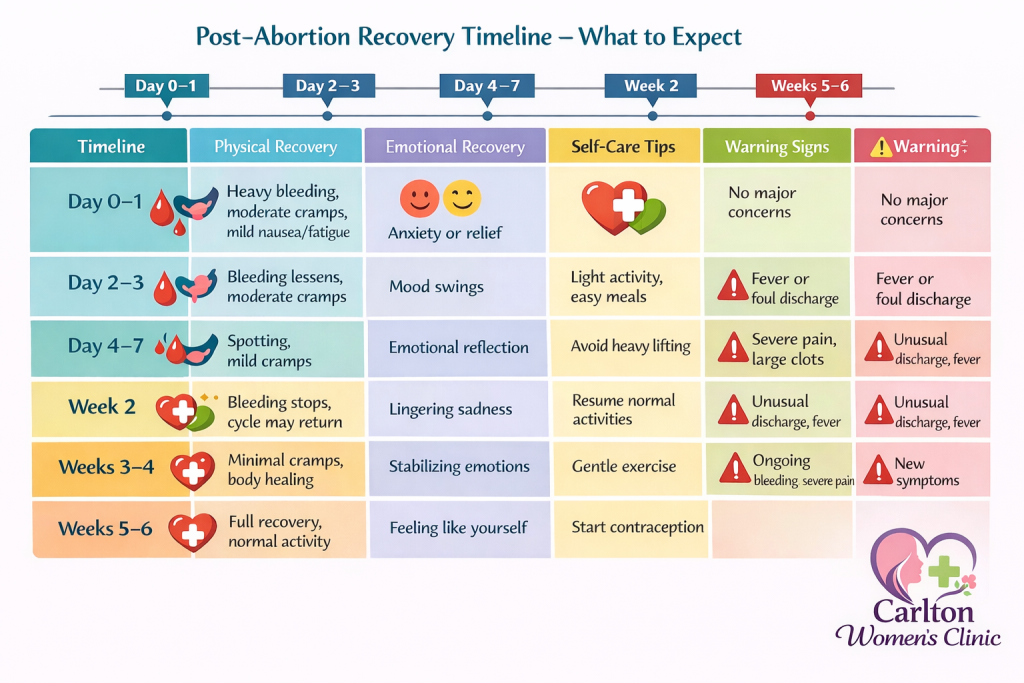
Self Care Tips after Abortion
After an abortion, your body and mind need proper care, physically and emotionally, and following these self-care tips after abortion can help you recover in the shortest time.
Physical Self-Care
- Managing Pain: Use abdominal pain medication like nurofens for period pains but avoid Aspirin. (It will make you bleed more)
- Hygiene: Use ordinary heavy-flow menstrual pads to monitor bleeding. Do not use tampons in order to reduce the risk of infections.
- Resting: Give yourself a day or two of rest immediately following the procedure. Avoid strenuous activities like lifting or exercising.
Resuming Activities & Exercise
- Daily activities: You can usually go back to light activities the next day if you feel okay. Listen to your body and rest when needed.
- Exercise and heavy work: After an abortion you should avoid heavy tasks like exercise, heavy lifting, or walking long distances for a few days.
- Swimming and baths: Stay out of swimming pools, hot tubs, and baths for 1–2 weeks to lower the risk of infection. Showering is safe right away.
- Sex: Wait until heavy bleeding has stopped, or about 1–2 weeks, before having penetrative sex because ovulation can happen within one week after the procedure.
Emotional Self-Care
- Acknowledge Your Feelings: It is normal to experience a range of emotions, including relief, sadness, or mood swings caused by sudden hormonal shifts.
- Seek Support: Talk to trusted friends or family. If you need confidential, non-judgmental support
- Be Kind to Yourself: Activities such as keeping a journal, watching something you like, or going outside can help you cope.
Warning Signs & When to Seek Help!
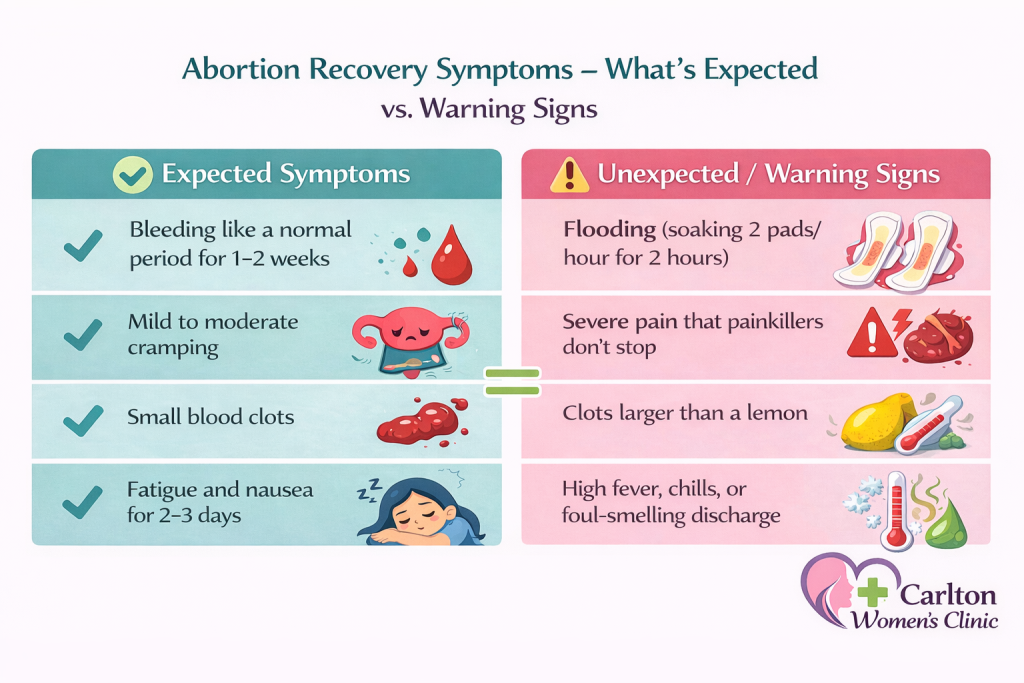
Abortion, whether self managed or done at the doctor's office, is considered safe, and most people recover within a few days. While complications are rare, it is important to watch out for these warning signs:
- Excessive Bleeding: Soaking more than two maxi sanitary pads in one hour.
- Severe Constant Pain: Intense abdominal pain that does not improve even after taking pain medication.
- High Fever: A temperature of 38°C (100.4°F) or higher, especially if it lasts longer than 24 hours.
- Fainting or Dizziness: Feeling extremely lightheaded, fainting, or experiencing a rapid heartbeat.
- Continued Pregnancy Symptoms: Nausea, vomiting that continues for more than two weeks after the procedure.
Normal vs. Abnormal Symptoms
Frequently Asked
Post-Abortion Care Questions!
What can i use for pain relief?
You can take pain medicine like paracetamol or ibuprofen to help with cramps and abdominal pain.
Is it normal to feel emotional?
Yes, it’s completely normal. You might feel sad, relieved, or emotional for a few days or weeks after terminating a pregnancy. Talking to someone you trust can help.
Can I use tampons or normal pads?
Use pads, not tampons, for at least a week after abortion. Tampons can increase the risk of infection during recovery.
When will my next period return?
Your next period is likely to come back in 4–6 weeks, but it can be sooner or later for some people.
When is it safe to have sex?
.Wait until the bleeding stops and you feel ready, usually after 1–2 weeks. Using a condom is important to prevent infection or falling pregnant again.