Post Abortion Care After Medical Abortion: What to Expect

Table of Contents
TogglePost abortion care after a medical abortion is an important part of your recovery journey because it helps you know what is normal during the recovery process.
From bleeding and cramping to hormonal and emotional changes, each experience is unique, but there are clear, medically guided patterns you can rely on.
This guide will walk you through what is normal, how to recover safely, and when to seek support, so you can feel informed, reassured, and in control of your health.
Key Points
- Most side effects happen within the first 24 hours.
- You may feel sick especially after taking the medication.
- You may experience loose stools, but it usually goes away quickly.
- Cramping is expected as the uterus contracts to pass the pregnancy tissue.
- Bleeding can be heavier than your normal period and may include clots..
What Is Post-Abortion Care
According to the Abortion Care Handbook, post-abortion care refers to the medical care, advice, and support a person gets after an abortion to recover safely and stay healthy.
This care goes beyond the immediate procedure and includes monitoring physical recovery, managing symptoms such as bleeding or discomfort, and understanding how the body heals over time.
Why Is Post-abortion Care Important?
Post-abortion care is more than just general advice. It gives you clear guidance on how to care for your body after a medical abortion, supporting safe recovery while building confidence in managing your health Below are others reaons:
-
Saves Lives:
Complications such as heavy bleeding and infections are among the leading causes of maternal health risks. According to WHO (2023), proper post-abortion care can reduce serious complications by up to 60%. -
Prevents Unplanned Pregnancy:
Starting family planning soon after a medical abortion helps reduce the risk of unintended pregnancies and repeat abortions, supporting long-term reproductive health.
Based on WHO guidance and international human rights standards, post-abortion care must be accessible to everyone and delivered with confidentiality, respect, and without fear of stigma or discrimination.
— World Health Organization (WHO)
What Happens to Your Body After a Medical Abortion
The common short term side effects of a medical that most indivudals expercince include:
-
Gastrointestinal Issues :
You may feel nauseous, vomit, or have diarrhoea, especially after taking the misoprostol tablets. -
General Discomfort:
Some people feel dizzy, tired, or experience headaches, mild fever, or chills for about 24 hours after taking the medication. -
Cramping and Pain:
Cramping is also expected. It may feel like a heavy period or sometimes stronger as the uterus contracts in order to expel the pregnancy tissue. -
Vaginal Bleeding:
Bleeding can range from light spotting to heavier bleeding than a normal period.
Most of the side effects usually improve within a few hours, although each person’s experience may be slightly different.
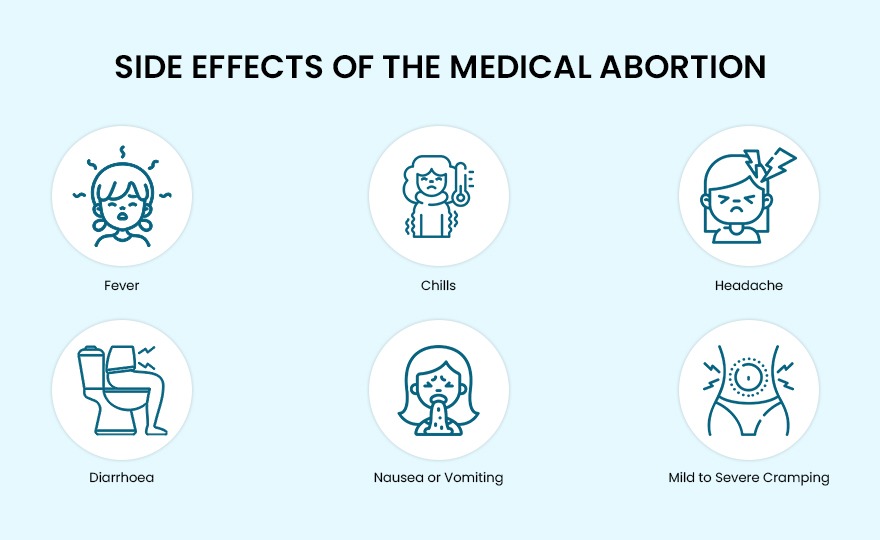
Bleeding, cramping, nausea, fever, and chills are common and expected effects of medical abortion and usually resolve within a few days.
— World Health Organization (WHO)
Source: WHO Abortion Care Guideline
Emotional Side Effects
Coping with an abortion can be difficult, especially if you’re going through it alone. Although scientific research shows abortion itself is not linked to mental health problems, many women still experience a mix of emotions afterward and these might include:-
- Sadness, grief or a sense of loss.
- Guilt or shame often related to social stigma.
- Anxiety or mood shifts due to sudden hormonal changes
Note: Psychological effects may also occur, and these vary from person to person. Seek medical attention if you are struggling to cope after terminating a pregnancy.
How To Reduce and Manage Side Effects Safely

Managing side effects during and after a medical abortion involves a combination of over-the-counter medication and simple home comfort measures.
Most symptoms improve on their own, but it is important to monitor them to make sure they remain within a safe range.
-
Nausea and Vomiting
- Medication: Over-the-counter options such as Dramamine (25–50 mg) or Benadryl may be taken every 6 hours if needed.
- Relief: Drink ginger ale, peppermint tea, or chamomile tea to help settle your stomach.
-
Abdominal Pain
- Medication: Take 800 mg of ibuprofen every 6–8 hours as needed. Avoid aspirin, as it may increase bleeding.
- Comfort: Use a heating pad or hot water bottle on your lower abdomen. Resting and gentle abdominal massage may also help reduce discomfort.
-
Fever and Chills
- Mild fever (below 38°C / 100.4°F) or chills. Keep a blanket nearby, rest, and drink plenty of fluids to stay hydrated.
Discover more about recovery and post-abortion self-care, in our detailed guide on Post-abortion Self-Care ↗ .
When to Seek Immediate Medical Attention
While serious complications after a medical abortion are rare, it is important to contact a healthcare provider or go to an emergency room if you experience:
-
Signs of Shock:
Feeling extremely dizzy, lightheaded, or fainting. -
Excessive Bleeding:
Soaking through two or more maxi pads per hour for two hours in a row. -
Severe Pain:
Intense abdominal or back pain that is not relieved by medication. -
Prolonged Fever:
A temperature of 38°C (100.4°F) or higher that lasts more than 24 hours after taking the second pill. -
Foul-Smelling Discharge:
An unpleasant vaginal odor, which may indicate an infection.
Summary
Experiencing side effects during a medical abortion can feel overwhelming, but it’s important to remember that these symptoms are a normal part of process. And always remember every woman’s experience is slightly different.
Understanding this can help you feel more prepared and reassured throughout the process. If you need guidance, or have any concerns about your symptoms, don’t hesitate to contact our clinic for confidential support. Speaking to a qualified provider can give you clarity and peace of mind at every stage.
- New York Times. (2021). Abortion Pills and FDA Guidelines. Retrieved from https://www.nytimes.com/2021/12/16/health/abortion-pills-fda.html
- Section27. (2019). Gauteng Abortion Services Pamphlet. Retrieved from https://section27.org.za/wp-content/uploads/2019/08/Gauteng-Abortion-Services-Pamphlet.pdf
- University of KwaZulu-Natal ResearchSpace. (n.d.). Research on Abortion Access and Services. Retrieved from https://researchspace.ukzn.ac.za/items/d5e541c6-1f1b-4220-a508-a0dd4b7f7b9f
- Abortion Support South Africa. (n.d.). Safe Abortion Information. Retrieved from https://abortionsupport.co.za/
- Government of South Africa. (2019). North West Health Facilities Offer Safe Termination of Pregnancy. Retrieved from https://www.gov.za/news/media-statements/north-west-health-facilities-offer-safe-termination-pregnancy-28-oct-2019
- World Population Review. (n.d.). Countries Where Abortion is Illegal. Retrieved from https://worldpopulationreview.com/country-rankings/countries-where-abortion-is-illegal
- ScienceDirect. (2024). Medical Abortion Research Article. Retrieved from https://www.sciencedirect.com/science/article/pii/S1098301524000858
- PLOS ONE. (2018). Abortion Practices Study. Retrieved from https://journals.plos.org/plosone/article?id=10.1371%2Fjournal.pone.0197485
- Flo Health. (n.d.). Gestational Age Week by Week. Retrieved from https://flo.health/pregnancy/week-by-week/gestational-age
- DrugBank. (n.d.). Mifepristone (DB00929) Information. Retrieved from https://go.drugbank.com/drugs/DB00929
- FDA. (n.d.). Questions and Answers: Mifepristone for Medical Termination of Pregnancy. Retrieved from https://www.fda.gov/drugs/postmarket-drug-safety-information-patients-and-providers/questions-and-answers-mifepristone-medical-termination-pregnancy-through-ten-weeks-gestation
Discover More!

Signs of an Infection After Abortion

Know the Signs of Infection After an Abortion
Medication used to safely end an early pregnancy, usually with two drugs: Mifepristone and Misoprostol. The pills work together to stop the pregnancy and help the body expel it.
A non-surgical method for ending a pregnancy using prescribed pills, typically within the first trimester. Medical abortion does not require an operation or hospital stay.
The age of a pregnancy, measured in weeks from the first day of the last menstrual period. This helps determine which abortion options are safe and available.
A clinic or healthcare professional legally authorized to offer safe abortion services, following medical guidelines and local regulations.
Remote healthcare where patients consult with medical professionals online or by phone. For abortion services, telemedicine may allow for counseling, prescribing pills, and medical support without needing to visit a clinic in person.
A medication used after Mifepristone in the abortion pill regimen to cause uterine contractions and expel pregnancy tissue.
The first pill in the medical abortion process that blocks the hormone progesterone needed to sustain pregnancy.
The first 12 weeks of pregnancy, during which medical abortion with pills is commonly available.
Support services provided to help individuals understand abortion options, process, and emotional aspects before and after the procedure.