Table of Contents
ToggleA Medical abortion refers to a non-surgical method of terminating an early pregnancy through the use of medications. This is a common practice in medical facilities, telemedicine, and at home when proper guidance is provided,
In this guide, we will outline the exact process on how a medical abortion works, what to expect, the time it takes to complete the process and how to take care of yourself during the process.
Key Points
Abortion pills may be obtained from licensed clinics or through authorized telemedicine abortion providers.
- It is highly effective when used correctly (95–98%).
- No in-clinic visit required for eligible patients.
- Offers greater privacy compared to surgical.
- Reduces travel time, costs, and waiting periods.
- Ongoing support can be provided via phone or secure messaging.
What Is a Medical Abortion?
A medical abortion is a safe, non-surgical method of terminating an early pregnancy through the use prescription medications, typically mifepristone and misoprostol.
This technique is widely practiced in South Africa and normally done up to 10 weeks of pregnancy. Some healthcare providers may offer it up to 12 weeks, depending on medical assessment.
Is Medical Abortion Legal in South Africa?
Yes medical abortion is legal in South Africa under the Choice on Termination of Pregnancy Act 92 of 1996. The Act, provides women with the legal right to access safe and legal abortion services.
Under the Act:
- Up to 12 Weeks: A woman may request an abortion for any reason.
- 13 – 20 Weeks: Abortion is permitted only under the conditions below:
- Rape or incest
- Risks to the woman’s physical or mental health
- Severe fetal abnormalities
- Significant social or economic hardship
No consent other than that of the pregnant woman is required. A minor may be advised to consult a parent or guardian, but the procedure cannot be refused if she does not.
— South African law
Source: South African legal review
Who Can Have a Medical Abortion?

In South Africa any one regardless of age can access a medical abortion during the first 12 weeks and meets specific health criteria.
Who Qualifies?
- Pregnancy Stage: You can have a medical abortion if you are less than 12 weeks pregnant.
- Health Status: You should be in generally good health and have confirmed that the pregnancy is not ectopic. (Intrauterine pregnancy)
Who May Not Be Eligible?
- Too Far Along: If you are past 12 weeks of pregnancy, a surgical abortion is usually recommended.
- Have an IUD: If you have an Intrauterine Device it must be removed before using abortion medication.
- Emergency Access: People who can not access a hospital or clinic if a complication happens also do not qualify.
For a complete overview about medical abortion, See – What Is a Safe Medical Abortion? ↗
What's Involved in Getting a Medical Abortion?
Before using the abortion medication, you meet in person with the provider or via a Telehealth platform for a medical assessment.
How Do Abortion Pills Work in the Body?
Abortion pills work in two stages. First by blocking progesterone the pregnancy hormone needed to continue pregnancy and then cause the uterus to contract and expel the pregnancy tissue.
Video Explanation of How Abortion Pills Work
Patient Information
Before administering medications, the patient should be informed that:
- Medical abortion is effective and safe. Only 2 out of 100 women will need vacuum aspiration to end the pregnancy. Complications are rare.
- Misoprostol may have teratogenic effects (this information should be known in case she changes her mind after taking the drugs or if the regimen fails).
- During abortion, she will experience cramping, bleeding, expulsion of blood clots, and between 13 and 22 weeks LMP, expulsion of the foetus and placenta.
- Most often there will be no cramping and bleeding after taking mifepristone. Cramping and bleeding start 1 to 3 hours after taking misoprostol and usually slow down within 24 hours. They should not exceed 48 hours. Light bleeding may last up to 1 month.
- The abortion will usually be completed within 24 to 48 hours.
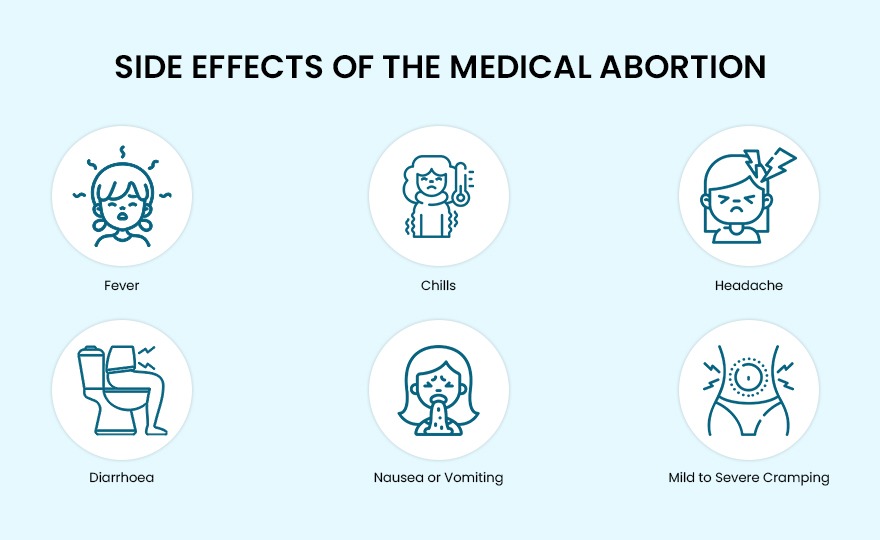
- Misoprostol, especially when several doses are taken, can cause nausea, diarrhoea, chills, and fever that should not persist longer than 24 hours after taking the medication.
- Severe pain, heavy bleeding (soaking 2 pads per hour for 2 consecutive hours), foul-smelling discharge, and fever lasting more than 24 hours are signs requiring immediate medical attention.
- Menstrual periods will resume within 4 to 8 weeks but fertility returns rapidly; ovulation can occur as early as 10 days post-abortion. It is recommended to start contraception immediately.
Step-by-Step: How Medical Abortion Works
A medical abortion or medication abortion involves taking two different medications, mifepristone and misoprostol, 24 hours apart.
Step 1: The First Pill – Mifepristone
- How It Is Taken: It is usually taken as one tablet by mouth.
- Function: It blocks progesterone, a natural hormone the body needs to support a pregnancy.
- Effect: It causes the pregnancy to detach from the uterine wall, stopping it from growing further.
Step 2: The Second Pill – Misoprostol
- How It Is Taken: These tablets can be dissolved in the mouth (between the cheek and gum) or inserted into the vagina.
- Function: Misoprostol is a synthetic prostaglandin that softens and opens the cervix (the opening to the uterus).
- Effect: It causes strong uterine contractions and bleeding, which help push the pregnancy tissue out of the body through the vagina.
What Happens After Taking Abortion Pills?
After taking the abortion pills, your body goes through something similar to an early miscarriage. This usually happens in steps, as the two medicines start to work.
What to Expect:
- General Symptoms: It is common to experience nausea, vomiting, diarrhea, dizziness, and headache.
- Bleeding and Cramping: These usually begin within 1 to 4 hours after taking the misoprostol.
- Passing Tissue: The pregnancy tissue usually passes within 4–5 hours, although the process may take longer for some individuals.
Side Effects of Medication Abortion
It is normal to experience temporary side effects after taking misoprostol as part of a medical abortion.
- Gastrointestinal Issues: Nausea, vomiting, and diarrhea are common.
- Cramping and Abdominal Pain: Cramping can be intense, especially during the first few hours.
- Vaginal Bleeding: Heavy bleeding with blood clots is expected and indicates that the medication is working.
Warning Signs After Taking Abortion Pills
While medication abortion is considered safe, it is important to watch out for warning signs that require immediate medical attention. These may include:
- Excessive Bleeding: Soaking two or more heavy pads per hour for two consecutive hours.
- Severe Pain: Intense abdominal or pelvic pain not relieved by ibuprofen or a heating pad.
- Large Blood Clots: Passing clots larger than a lemon or golf ball for more than two hours.
- Fainting or Dizziness: Feeling extremely weak, lightheaded, or losing consciousness.
Seek medical care if you experience severe, persistent, or concerning symptoms during or after a medical abortion.
— World Health Organization
How Long Does a Medical Abortion Take to Complete?
A medical abortion usually takes 2–3 days, but the severe cramping and bleeding often happens on the day you use the misoprostol tablets.
Duration (Simple Timeline)
| 🗓️ Total time | Takes 2–3 days |
| 💊 Day 1 (Mifepristone) | Stops the pregnancy |
| 💊 Day 2 (Misoprostol) | Contracts the uterus |
| 💥 Side effects | Cramping, nausea, slight fever |
| ⏱️ Expect bleeding | Usually starts 1–4 hours later |
| 🛌 Recovery | Feel better in 1–2 days |
| ✅ Confirm | Test or visit clinic after 3–4 weeks |
Where to Get Medical Abortion Services in South Africa
-
Public Hospitals and Government Clinics:
You may access free abortion services at designated public health facilities . However, availability and waiting times may vary depending on location and demand. -
Private Clinics:
Registered abortion clinics offer discreet medical abortion services for a fee. The cost depends on gestational age and the specific services provided.Wondering About the Cost?
See our updated pricing guide for a clear breakdown of how much a medical abortion costs. Medical Abortion Costs ↗ -
Telehealth Services:
Medical abortion can also be accessed through regulated telehealth providers where a qualified healthcare professional conducts a remote consultation and provides guidance on safe use.
Important Safety Information!
Be cautious of providers or advertisements claiming to offer abortions beyond the legally permitted gestational limits.
Obtaining abortion medication from unverified sources or using unsafe abortion methods is risky, can harm your reproductive health, and in severe cases may lead to serious complications or even death.
Summary
Medical abortion is a safe and highly effective method for ending an early pregnancy within the first 12 weeks.
With the correct medication, clear medical guidance, and access to follow-up care, it can be managed privately and confidently without any complications.
If you need confidential guidance or want to discuss your options, contact our clinic today to speak with a qualified healthcare provider.
 Dr. Nelisiwe Mbele
Medically reviewed by Dr. Nelisiwe Mbele, Obstetrician & Gynaecologist at Carlton Women’s Clinic Johannesburg. SEO and web optimization support provided by Rank4Google.
This content is for educational purposes only and is not a substitute for medical advice.
Share with friends!
Common FAQ's About Medical Abortion Process
Can i go to work after a medical abortion?
Yes you can go to work the next day provided you are feeling well. However it is recommended to rest for a few days.
What are the risks of a medical abortion?
A medical abortion is considered safe. But like any other medical procedure, potential risks might include, incomplete abortion, or infections after the abortion process.
How can i make an abortion less painful?
You can take ibuprofen 30 minutes before using misoprostol. But avoid Aspirin, it will make you over bleed.
How effective is a medical abortion?
A medication abortion is very effective especially in the first 12 weeks. But it also depends on how the pills were used.
How do i know my abortion failed?
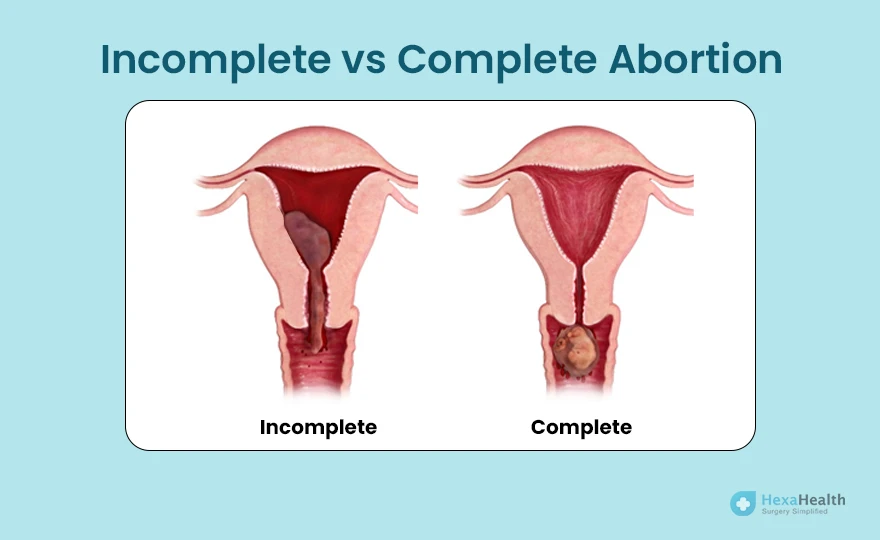
A failed abortion can either be an incomplete abortion (where some tissue remains in the uterus) or an ongoing pregnancy (where the procedure did not work at all)
When can i start family planning?
To avoid future pregnancy, you can start family planning once the abortion is completed and confirmed with a pregnancy test after 3 – 4 weeks.
- Healthline. (n.d.). Nutrition Tips After Abortion. Retrieved from https://www.132healthwise.com/food-you-should-eat-after-an-abortion.php
- BSW Health. (n.d.). Dietary Changes After Abortion. Retrieved from https://www.webmd.com/women/guide/abortion-recovery
- Healthline. (n.d.). Weight Loss After Abortion. Retrieved from https://www.healthline.com/nutrition
- Carlton Women’s Clinic Johannesburg. (n.d.). Right Abortion Method. Retrieved from https://www.womensclinicjohannesburg.co.za/best-abortion-method/
- HealthDirect. (n.d.). Oestrogen. Retrieved from https://www.healthdirect.gov.au/oestrogen
- WebMD. (n.d.). Progesterone Uses and Risks. Retrieved from https://www.webmd.com/vitamins-and-supplements/progesterone-uses-and-risks
- Carlton Women’s Clinic Johannesburg. (n.d.). Medication Abortion. Retrieved from https://www.womensclinicjohannesburg.co.za/medical-abortion-in-johannesburg/
- Carlton Women’s Clinic Johannesburg. (n.d.). Surgical Abortion. Retrieved from https://www.womensclinicjohannesburg.co.za/what-you-need-to-know-about-surgical-abortions/
- Cleveland Clinic. (n.d.). Foods to Help Healing. Retrieved from https://health.clevelandclinic.org/foods-to-help-healing
- Life Healthcare. (2023). Post-Surgical Diet Guidance. Retrieved from https://www.lifehealthcare.co.za/media/3773/life-oncology_diet-sheets_diarrhoea_june2023_v4-outlines.pdf
- PMC. (2014). Iron Deficiency and Wound Healing. Retrieved from https://pmc.ncbi.nlm.nih.gov/articles/PMC4091310/
- Food & Home Magazine. (n.d.). Anti-inflammatory Foods. Retrieved from https://www.foodandhome.co.za/how-to/anti-inflammatory-foods
- Carlton Women’s Clinic Johannesburg. (n.d.). Recovering from Abortion. Retrieved from https://www.womensclinicjohannesburg.co.za/recovering-from-abortion/
- Harvard Health Publishing. (n.d.). Proper Hydration. Retrieved from https://www.health.harvard.edu/staying-healthy/how-much-water-should-you-drink
- Carlton Women’s Clinic Johannesburg. (n.d.). Abortion Recovery Tips. Retrieved from https://www.womensclinicjohannesburg.co.za/abortion-recovery-tips/#post-abortion-care
- BSW Health. (n.d.). Consult Your Doctor Before Starting New Diet. Retrieved from https://www.bswhealth.com/blog/consult-your-doctor-before-starting-new-diet-or-fitness-program
The physical and hormonal healing period following an abortion, during which the body restores strength, balance, and normal function.
A condition caused by low iron levels, often linked to blood loss, leading to fatigue, weakness, and reduced oxygen transport.
The stabilization of reproductive hormones after pregnancy ends, supporting energy levels, mood, and overall recovery.
A key female hormone that regulates the menstrual cycle and reproductive system, which fluctuates after abortion.
A hormone that supports pregnancy and drops after abortion, triggering physical recovery processes.
The body’s ability to digest and absorb vitamins and minerals needed for healing and energy restoration.
Foods that help reduce inflammation in the body, supporting tissue repair and faster recovery.
A diet rich in protein that supports muscle repair, tissue healing, and immune strength.
The maintenance of essential minerals that regulate hydration, nerve function, and muscle activity.
A measure of how well the body is supplied with fluids, essential for circulation and healing.
The process by which the body rebuilds damaged or stressed tissues following a medical procedure.
Dietary choices that strengthen the immune system and help protect against infection during recovery.
Foods high in iron that help replenish blood levels and reduce post-procedure fatigue.
The process by which vitamin C enhances iron uptake and supports immune and tissue health.
Medical guidance, nutrition, and self-care practices that support safe and complete recovery.