Table of Contents
ToggleTerminating a pregnancy can be an incredibly challenging and emotional experience most especially if you choose to end the pregnancy using abortion pills. However it is important to understand what to do if the process doesn’t go as expected.
During abortion, an incomplete abortion can occur if the uterus does not fully expel all pregnancy tissue. This can lead to ongoing bleeding, cramping, or other symptoms that require immediate medical attention.
Key Points
- Incomplete abortion can occur during a miscarriage or after an abortion.
- Inevitable abortion is more common after 9 weeks of pregnancy.
- Early recognition of symptoms helps prevent complications.
- It requires medical attention and does not resolve on its own.
- Delayed treatment can lead to infection or sepsis.
What Is an Incomplete Abortion?
An incomplete abortion is when a pregnancy is terminated and not all the pregnancy tissue is fully expelled from the uterus. This can sometimes occur during a miscarriage if you use a less dose of misoprostol tablets.
If you are experiencing an incomplete abortion, it means some pregnancy tissue remained in your uterus. This serious condition requires immediate medical attention, as leaving it untreated can serious complications or organ damage.
Complete and Incomplete Abortion: What You Need to Know
When in the process of terminating a pregnancy, it’s important to understand the difference between a complete abortion and an incomplete abortion.
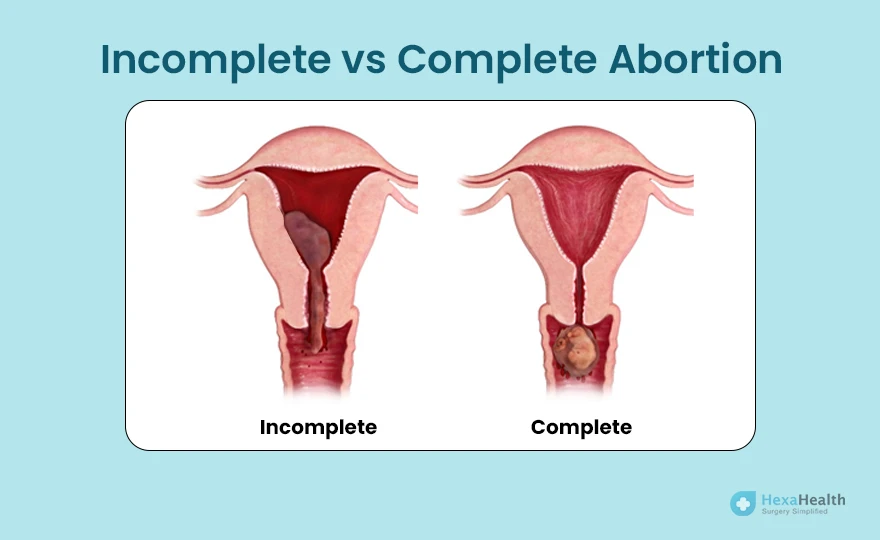
Complete Abortion
A complete abortion occurs when all pregnancy tissue has been expelled from the uterus. Symptoms like cramping and bleeding subside, the cervix closes and the ultrasound will show an empty uterus.
Incomplete Abortion
An incomplete abortion happens when some pregnancy tissue remains in the uterus. The chance of an incomplete abortion is higher with a medical abortion but can occur regardless of the type of abortion you are undergoing.
Key Differences
Common Causes of Incomplete Abortion
Prevention of incomplete abortions requires an understanding of their underlying causes because around half of them happen due to genetic issues in the developing pregnancy. Other common causes include:
- Diabetes: High blood glucose levels can disrupt the vascular system and cause an incomplete abortion. There is also a possibility of stillborn baby birth.
- Obesity: It can can affect hormone and metabolic balance, which may increase the risk of a miscarriage or complications during an abortion. It can sometimes contribute to an incomplete abortion.
- Hypertension: By wounding blood flow to the uterus and interfering with the ejection of foеtal tissue, high blood pressure can lead to spontaneous abortion.
- Abnormal or incompetent cervix: Some sources note that cervical incompetence (or cervical insufficiency) may contribute to pregnancy loss which in some cases can lead to an incomplete abortion.
- Insufficient Medications:- Incase the pregnancy was being terminated using abortion pills, and the dosage was less, there is a high chance of an incomplete abortion.
What Are the Signs of Incomplete Abortion?
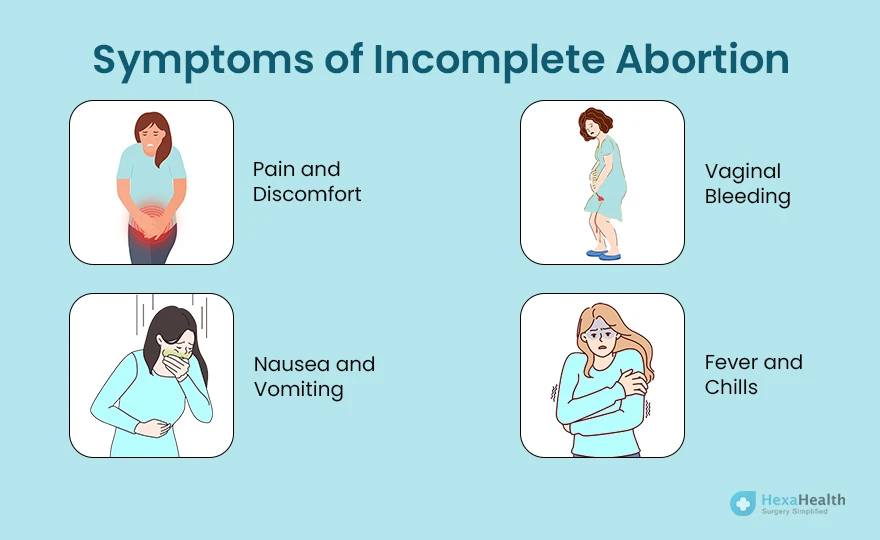
Below are the key signs of an incomplete abortion, which a healthcare provider can observe during an examination:
- Passage of large clots
- Feeling faint, weak or dizzy
- Foul smelly discharge
- Rapid heart rate (tachycardia)
Steps to Prevent Incomplete Abortions
One cannot prevent incomplete abortions, but there are several steps that can taken to reduce the risk. These include:-
- Early Diagnosis: Early diagnosis of diseases that affect the entire body like flu, or high blood pressure, can help provide treatment at the right time.
- Avoiding X-ray Scans: A pregnant woman should avoid direct exposure to x-rays because radiations can be harmful to the developing baby.
- Seeking Professional Assistance : Getting the pregnancy terminated by a trained medical professional reduces the chances of incomplete abortions, unlike unsafe abortion methods, which can increase complications and health risks.
📌 Must Read :- How to Care for Yourself after Abortion
Incomplete Abortion Treatment
Generally, there are two treatment approaches to expel the remaining pregnancy tissue if one is experiencing an incomplete process. Early treatment can reduce the risk of infection and significant blood loss.
Expectant Management
Expectant management means allowing the miscarriage to occur naturally, without medical or surgical intervention. In most cases, the body will naturally expel the fetal tissue as the uterine lining sheds.
Medical Treatment
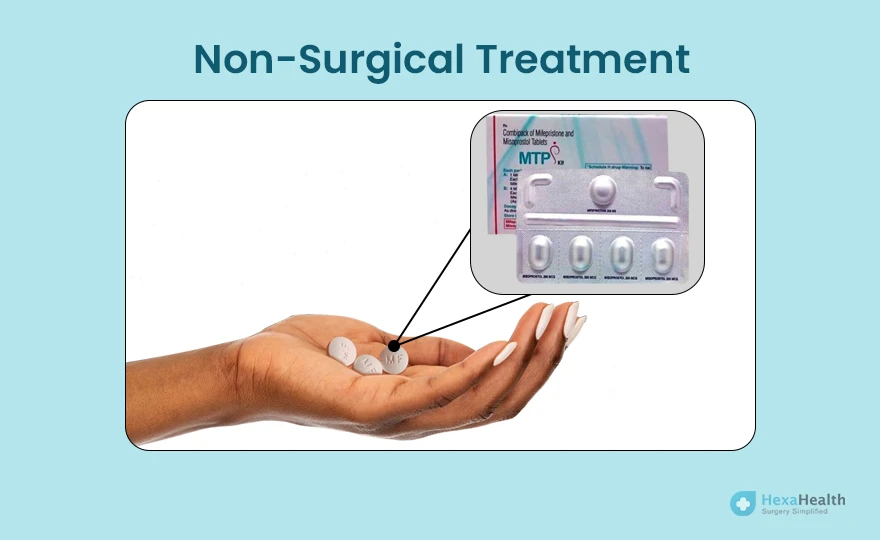
With the use of misoprostol tablets, the drug will causes the uterus to contract and remove the foetal remnants.
- It is effective with a success rate of 80 to 99% for pregnancies whose gestational age is 13 weeks or less.
Surgical Treatment
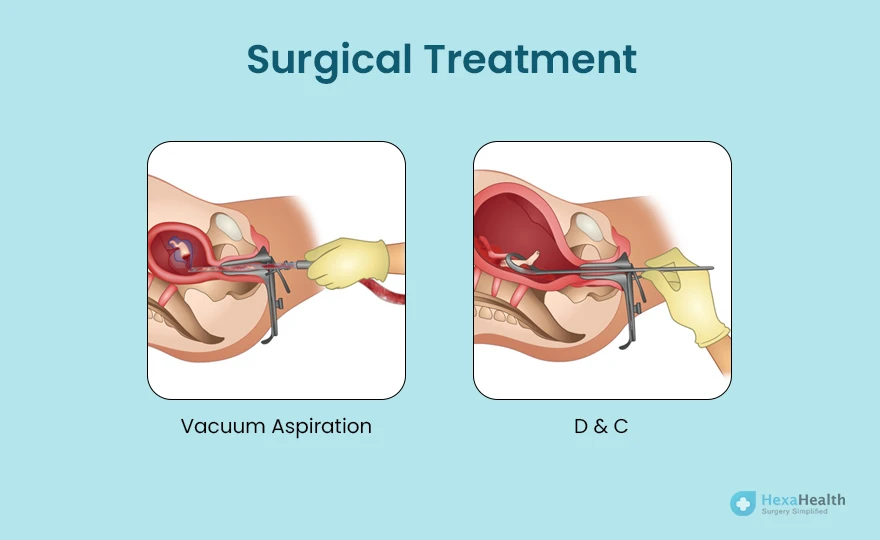
Procedures such as vacuum aspiration are fast and very effective for removing retained pregnancy tissue.
- This method is often recommended when there is heavy bleeding, signs of infection (septic abortion).
Conclusion.
An incomplete abortion can seriously affect a woman’s health if she does not seek prompt medical attention. If the patient has performed an abortion, a follow-up appointment with her healthcare provider is crucial to confirm that all foetal remnants have been completely removed from the uterus
Complications can be avoided with early discovery and proper medical care. If you’d like to understand what to expect after the procedure, read our full guide on abortion after-care, which explains essential abortion recovery steps and how to heal safely without complications.
 Dr. Nelisiwe Mbele, with the
Carlton Women’s Clinic
Team
Dr. Nelisiwe Mbele, with the
Carlton Women’s Clinic
Team
Sharing is Caring!
Incomplete Abortion FAQ's
How to tell if an abortion is complete?
An abortion is usually complete when bleeding and cramping start to decrease, and there is no more tissue passing from the uterus. You can also perform an ultrasound to make sure the uterus is empty.
How common are incomplete abortions?
According to the Charlotte Lozier Institute, when a medical abortion is used, about 3.4 % to 7.9 % of cases may require a follow‑up surgical procedure because the uterus did not fully expel all pregnancy tissue.
Is an incomplete abortion painful?
Yes, it can be painful. Many women experience cramps and abdominal pain when some pregnancy tissue remains in the uterus. The pain can range from mild to severe.
Can incomplete abortion lead to infertility?
If left untreated, incomplete abortion can cause infections or damage to the uterus, which may affect future fertility. However, with prompt medical care, most people fully recover and can have children later.
What can I eat after an incomplete abortion?
Eat a balanced diet with iron-rich and fibre-rich foods, avoid processed foods, and stay well-hydrated. This helps manage symptoms and supports recovery.
Is an incomplete abortion dangerous?
Yes if an incomplete abortion especially when combined with an infection may become life-threatening and can lead to sepsis. (when the body’s immune system has an extreme and damaging response to an infection)
- NHS. (n.d.). Pelvic Inflammatory Disease (PID). Retrieved from https://www.nhs.uk/conditions/pelvic-inflammatory-disease-pid/
- UpToDate. (n.d.). Uterine perforation during gynecologic procedures. Retrieved from https://www.uptodate.com/contents/uterine-perforation-during-gynecologic-procedures/print
- National Center for Biotechnology Information (NCBI). (2023). Postabortion Complications. Retrieved from https://www.ncbi.nlm.nih.gov/books/NBK507237/
- National Academies of Sciences, Engineering, and Medicine. (2018). The Safety and Quality of Abortion Care in the United States. Retrieved from https://nap.nationalacademies.org/catalog/24950/the-safety-and-quality-of-abortion-care-in-the-united-states
- American College of Obstetricians and Gynecologists (ACOG). (2022). Facts Are Important: Abortion Is Healthcare. Retrieved from https://www.acog.org/advocacy/facts-are-important/abortion-is-healthcare
- PMC. (2021). Unsafe Abortion and Maternal Health. Retrieved from https://www.ncbi.nlm.nih.gov/pmc/articles/PMC8378188/
- MedlinePlus. (2018). Abortion. Retrieved from https://medlineplus.gov/abortion.html
- World Health Organization. (n.d.). Sepsis Fact Sheet. Retrieved from https://www.who.int/news-room/fact-sheets/detail/sepsis
Pieces of pregnancy tissue that can stay in the uterus after an abortion.
The soft inner layer of the uterus that grows during pregnancy and sheds during periods or abortion.
Ending a pregnancy using pills like misoprostol.
Ending a pregnancy through a medical procedure, such as vacuum aspiration.
Letting a miscarriage happen naturally without medicine or surgery.
A medicine that helps the uterus push out pregnancy tissue.
When the cervix is too weak to stay closed during pregnancy, which can cause pregnancy loss.
A serious infection that can make the whole body very sick.
A fast heartbeat that can happen during complications after abortion.
All the tissue that grows in pregnancy, like the fetus and placenta.